In this interview, Note, Group Product Assistant Manager at Destination Asia, shares how evolving travel trends and responsible community engagement shape product development across the region. She reflects on what makes Asia stand out for both first-time and returning travellers, highlights three must-do experiences, and explains how thoughtful design and local insight come together to create journeys that feel distinctive and meaningful.
What sets product design in Asia apart from other regions?
Product design in Asia stands out because of the extraordinary range of experiences available across the region. Travellers can move between entirely different environments in a single journey, from five-star beachfront resorts in Indonesia to bubble lodges in Thailand, where guests observe elephants in their natural habitat.
The region’s contrasts are equally compelling. A winter visit to Japan offers snow-covered landscapes and deeply rooted seasonal traditions, while summer in Thailand brings vibrant energy and celebrations such as Songkran. Guests might begin the day hiking on a mountain or exploring a historic city and end it with a wellness ritual or spa experience.
To navigate this diversity, we have organised our portfolio into 11 travel styles. This structure creates flexibility for our partners, making it easier to match experiences with emerging trends such as Offbeat and Self-guided travel, while continuing to deliver strongly in core segments including Family, Luxury and Wellness.
Which travel trends are shaping demand right now, and what’s top of travellers’ wish lists?
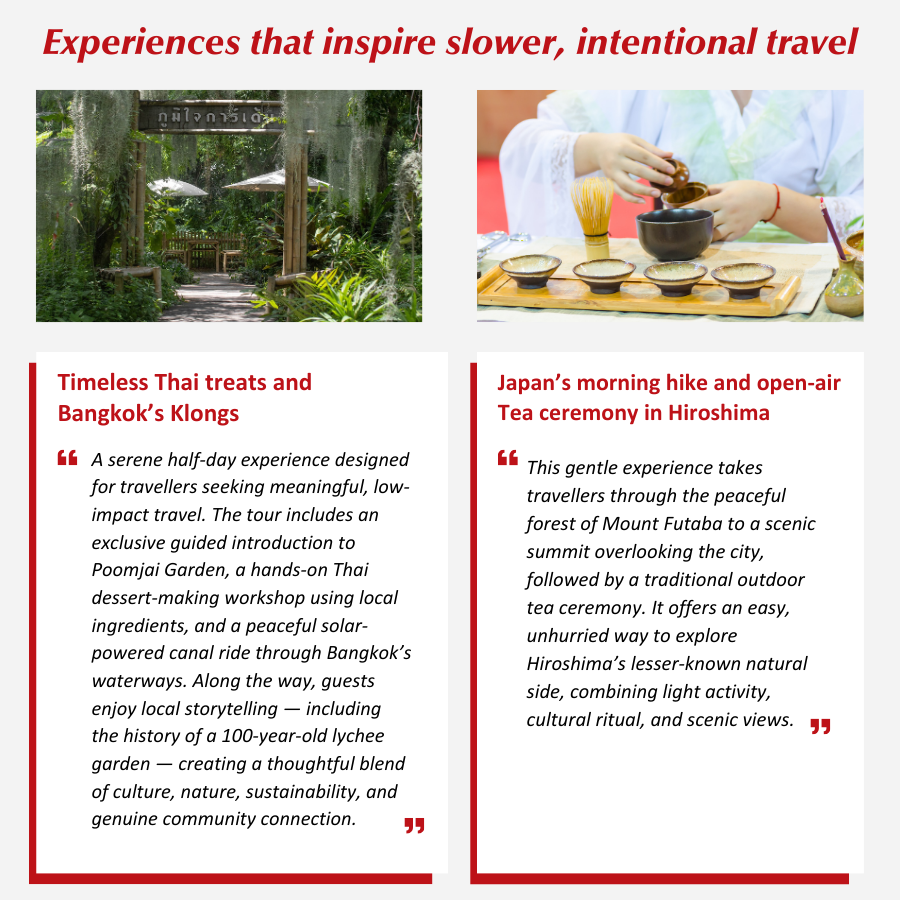
Travel demand is increasingly shaped by a desire to slow down and travel with intention. Rather than simply ticking off landmarks, travellers want meaningful engagement, including time to connect with local culture, enjoy regional cuisine, immerse themselves in nature, and move at a more considered pace.
Sustainability and community impact are also central to decision-making. At the top of wish lists are authentic, flexible journeys that feel personal and thoughtfully curated, rather than fast-paced or mass-market.
How do you ensure experiences positively impact the environment and local communities?
It begins with conscious design. We prioritise local guides and suppliers, build long-term partnerships on the ground, and develop experiences that respect both environment and culture. The aim is to ensure tourism delivers tangible benefits while protecting destinations for the future.
Keeping group sizes small, supporting community-led enterprises, and encouraging responsible travel behaviour are all part of that approach. In northern Thailand, for example, engagement with communities such as Doi Tung demonstrates how tourism can be structured to generate sustainable income while preserving cultural identity.
What tools do you create to help partners plan travel in Asia?
A key part of my role involves developing sales resources for our Agent & Events Hubs, enabling partners to easily access destination and product information.
Along with core product information, we provide practical tools such as year-round weather charts, helping partners confidently recommend the right destinations at the right time. Country fact sheets outline highlights, travel considerations, and essential planning information, making it easier to build itineraries, respond to client queries and align each journey with individual preferences.
What three experiences in Asia would you recommend above all others?
In Thailand, witnessing the blooming lotus flowers at Red Lotus Lake is extraordinary. At sunrise, boats glide through a vast sea of pink blossoms, creating a scene of rare tranquility. The lotus holds deep cultural symbolism in Thailand, representing renewal and spiritual purity, and the experience captures the country’s gentle rhythm and connection to nature.
In Indonesia, Walakiri Beach offers a strikingly different atmosphere. At sunset, its sculptural mangrove trees form dramatic silhouettes against glowing skies, creating a landscape that feels almost surreal. It is a simple yet powerful reminder of Indonesia’s natural beauty.
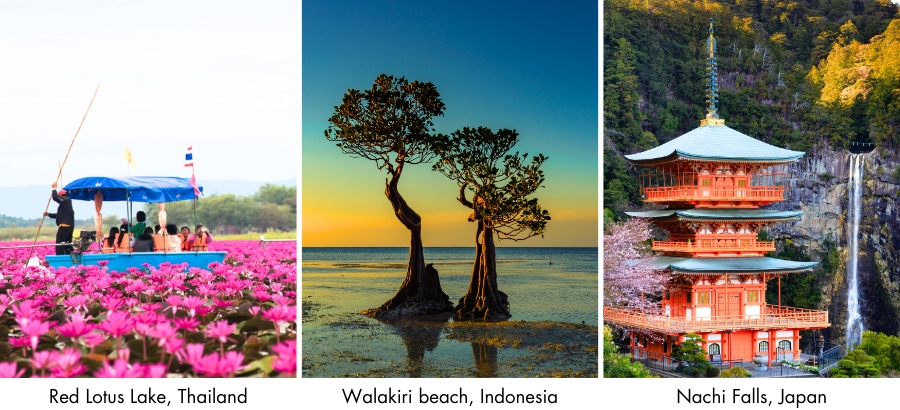
Finally, in Japan, a visit to Nachi Falls is unforgettable. As one of Japan’s tallest waterfalls, it cascades beside sacred shrines and an ancient forest, embodying the harmony between nature and spirituality that defines much of the country’s cultural identity.
What makes Asia such a memorable destination for travellers?
Asia stays with you because of its contrasts. You can walk past centuries-old temples and, minutes later, find yourself in the middle of a buzzing modern city. Tradition is part of everyday life. The food, the atmosphere, and the warmth of local people make travel here feel personal rather than just observational.
That thinking shapes how we design our experiences. We look beyond the headline sights and focus on moments that connect travellers with real life to expose them to local perspectives, daily rituals, and places that feel authentic rather than staged.
This is also where a DMC adds value. Our teams have long-standing relationships across the region so they know who to call, where to go, and how to shape experiences that feel genuine. It’s that local knowledge and access that turns a good itinerary into something far more memorable.